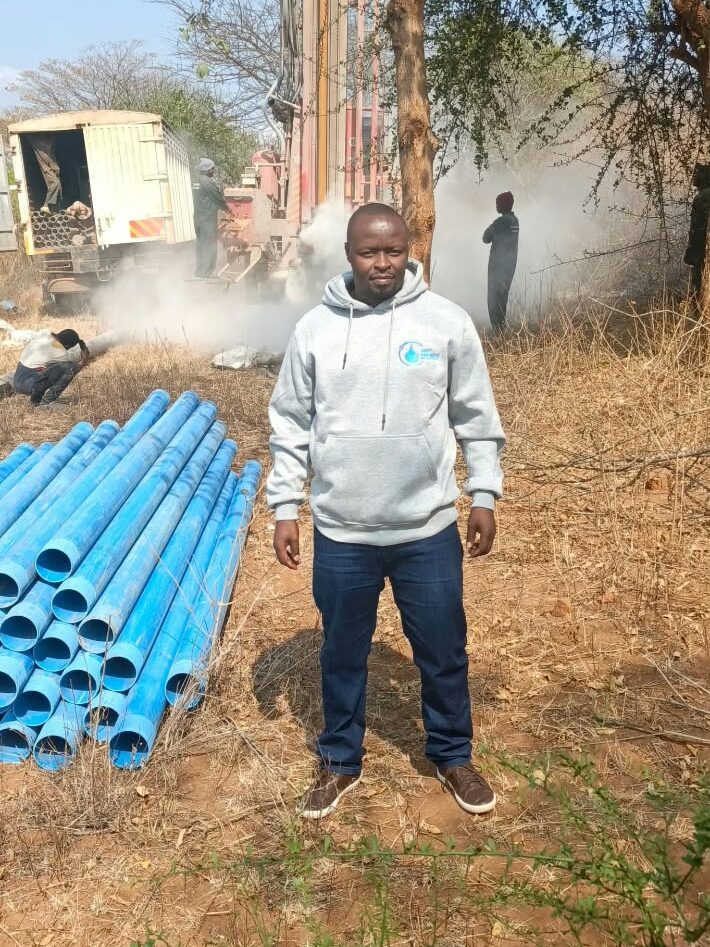
In early October, a post on X asked a question many Kenyan landowners have privately asked themselves: why does a borehole cost so much? The post argued that whoever finds a way to drill for under Khs. 500,000 will make a fortune. It drew more than 41,000 views and hundreds of replies.
The replies read like a public hearing. One user said he had been quoted KES 2 million for a borehole in Rumuruti in Laikipia County. Another had collected quotes from several companies and still faced a bill of around a million shillings. Some blamed diesel. Others blamed steel casings, government approvals, or drillers themselves.
They are all partly right. Understanding where the money goes is the best protection a borehole buyer has. So, to figure out the input costs for a borehole, we spoke to Agile Boreholes, who are based in Gitaru, on the outskirts of Nairobi in Kiambu County, a company that is actively in the business of drilling boreholes.
Where the money goes
Fuel. Drilling rigs run on diesel, and plenty of it. The Energy and Petroluem Regulatory Authority, EPRA’s current pricing holds Nairobi diesel at KSh 217.86 a litre, with KSh 64.07 of that going to taxes and levies, so close to 30% of every litre is tax. Prices swing too: in May, EPRA pushed Nairobi diesel to KSh 242.92. Every shift shows up in drilling quotes.
Machines. A professional rig is a major investment. One Nairobi driller’s published guide puts deep-water well rigs at KSh 15 million to over 30 million, and that capital is recovered metre by metre.
Paperwork. Groundwater belongs to the nation, so drilling legally requires approvals. The gazetted Water Resources Authority fee for a hydrogeological assessment or borehole siting is KSh 40,000 per site, plus staff days and mileage. Altogether, permit and licence fees can reach roughly KSh 87,000–200,000 before any drilling or equipment. Skipping them is not an option: operating a borehole without a WRA permit can attract fines of up to KSh 2 million or five years in prison.
The drilling itself. Drilling is usually billed per metre, with development, test pumping and water analysis charged as separate lump sums. Published rates vary widely by geology. Hard volcanic rock, common in Central Kenya and parts of the Rift Valley, drills slower and costs more.
The Rural Water Supply Network, an NGO, has noted that a shortage of hydrogeologists pushes up costs, alongside variable geology and long distances between depots and sites.
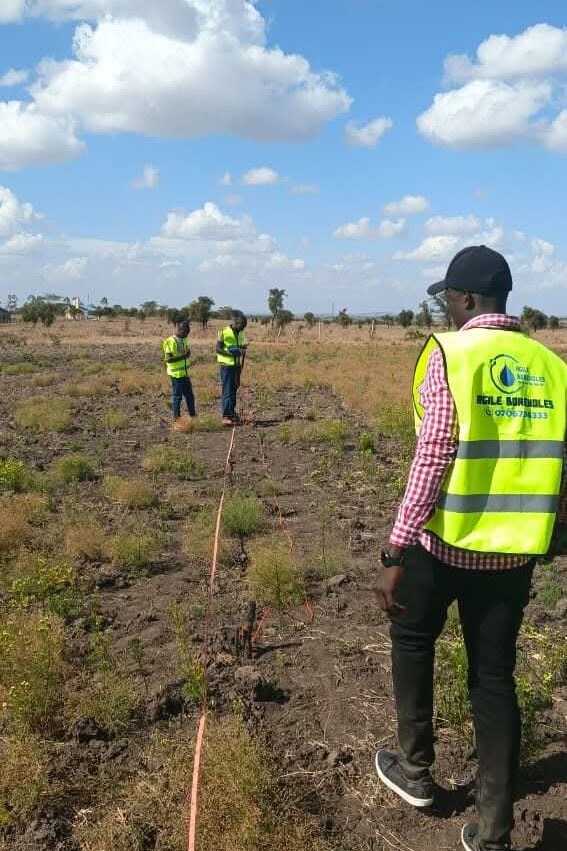
That is why the step many buyers are tempted to skimp on, the hydrogeological survey, is the one that protects the rest of the investment.
Survey first, drill second
Agile Boreholes say that, for them, there is no cutting corners, they start every project with a hydrological survey to ensure success.
According to Antony Mburu, CEO at Agile boreholes, ‘Before a rig arrives on site, the team carries out a hydrogeological survey to assess groundwater availability, depth and quality, and to identify the best drilling point.
He adds, ‘ A borehole only becomes useful once it is equipped. Agile offers the full chain, so clients don’t have to coordinate several different contractors.’
Some of the services he outlines include:
- Hydrogeological surveys
- Borehole drilling and equipping
- Pump testing and installation
- Solarization, using solar-powered pumping to cut reliance on grid electricity and diesel generators
- Water tank installation
- Borehole flushing to restore yield and water quality in existing boreholes
Agile’s typical costs average ksh.6500 per metre for air drilling and 13,000 shillings for mud drilling.
A buyer’s checklist
Mburu says that whoever you hire, five questions will protect your money:
- Has a qualified hydrogeologist surveyed the site? Ask to see the report.
- Is the quote itemised? Drilling, casing, development, test pumping and equipping should be listed separately, not as a single figure.
- Who handles the permits? Make sure WRA authorisation is secured before drilling starts.
- How are payments staged? Avoid paying everything upfront. Tie payments to milestones such as reaching agreed depth and installing casing.
- What happens if the hole is dry or low-yield? Get the answer in writing before the rig arrives.
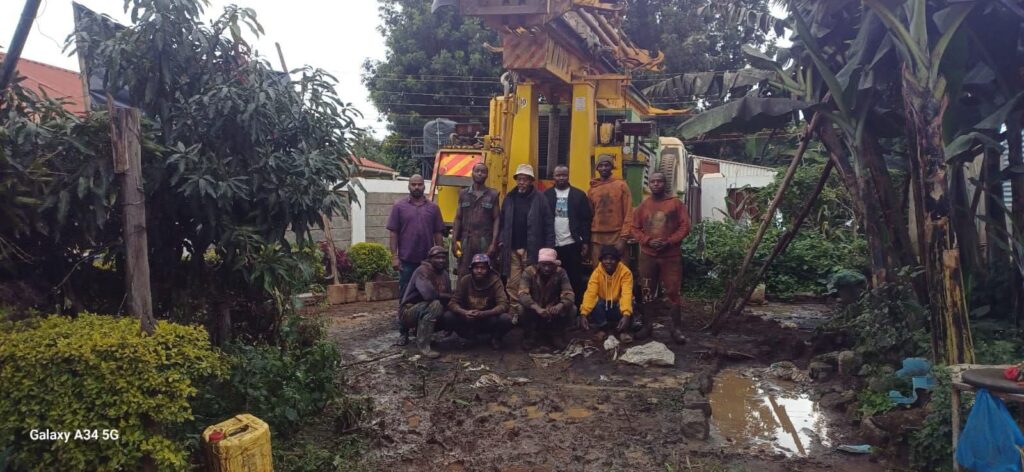
The importance of choosing the right drilling team is perhaps best illustrated by the experience shared by one of Agile Boreholes’ clients, who outlines how high costs are sometimes driven by incompetence.
The client says they had previously worked with another driller but were left with a dry borehole. After engaging Agile Boreholes, the company successfully drilled a productive borehole.
“After a previous driller left me with a dry borehole, I hired the Agile team, and they did an outstanding job. They were professional, knowledgeable, and transparent throughout the process. They successfully drilled a productive borehole, and I couldn’t be happier with the results. I highly recommend them to anyone looking for reliable and experienced borehole drilling services.”
Truly a satisfied customer.
This customers take, and the online debate shows that Kenyans are hungry for cheaper water. The surest to gurantee satisfa ction and manage costs is to drill with the experts.
Contact Agile Boreholes
Phone: +254 706 756 333
Email: info@agileboreholes.com
Website: agileboreholes.com